Coalition Seeks Tariff Relief for Ethical Indian Rugs
Petition warns tariffs punish fair-labor supply chains
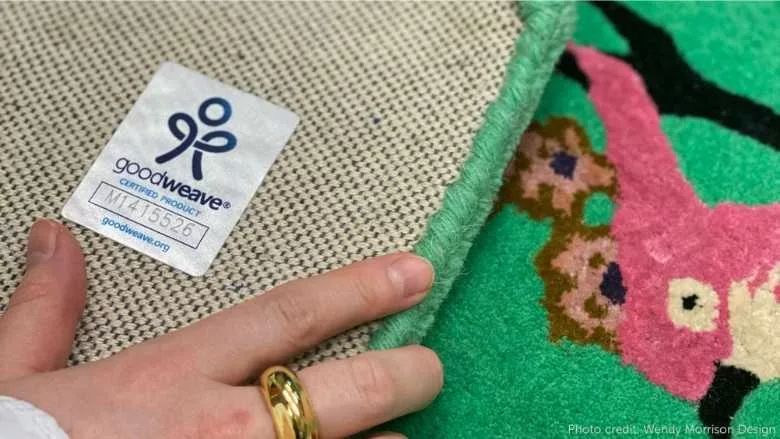
GoodWeave International and more than 70 U.S. retailers are petitioning federal policymakers for targeted tariff exemptions on Indian rugs, arguing that current broad trade penalties are creating a perverse system that punishes businesses for maintaining ethical labor standards.
The coalition, comprising 165 licensed Indian rug producers, issued an open letter calling for "tariff accommodation" for hand-knotted, hand-tufted, and flat-weave rugs produced by independently verified suppliers who have eliminated child, forced, and bonded labor from their operations.
The letter argues that recent broad tariff penalties imposed on Indian exports have disproportionately harmed U.S.-based companies that made the "conscious, value-driven choice" to build ethical supply chains—a process that requires constant monitoring, certification, and community-based programs that increase production costs.
"Under the current trade policy, the very businesses that have upheld these standards despite higher costs...are now facing the steepest barriers to survival," the letter states.
GoodWeave, a Washington D.C.-based organization that has certified child labor-free rug production since 1994, estimates that more than 1.5 million people in India and thousands in the United States could be directly or indirectly impacted by the current tariff structure.
The organization represents artisans and workers who produce rugs that account for 60% of Indian rugs entering American homes through U.S. retailers. The certification process involves rigorous worksite monitoring and audits to ensure products are free of exploitative labor practices.
The coalition argues that the current policy creates an unfair competitive advantage for companies that haven't invested in ethical labor practices, potentially undermining decades of progress in eliminating child labor from global supply chains.
"These policies punish those who did the hard work of complying with human rights due diligence legislation and uphold American values," the letter states.
The requested accommodation would preserve millions of artisan jobs in India and thousands in the U.S., while protecting retailers and interior designers who depend on ethical partnerships, according to the coalition.
The letter warns that without swift action, the current tariff structure risks "undermining decades of ethical trade progress, weakening U.S. businesses, harming American workers, eroding diplomatic trade preferences, and pushing vulnerable workers back into conditions we have all worked hard to end."
The coalition emphasizes that it believes policymakers can "uphold both the goals of U.S. foreign policy and the principles of fair trade and human rights" through targeted accommodations that reward rather than penalize ethical business practices.
Open Letter: Coalition of U.S. Retailers Urges Tariff Relief for Ethical Rugs
We at GoodWeave International, together with more than 70 retail and interior design partners in the United States, and 165 licensed rug producers in India, write to raise an issue deeply impacting producers and U.S. retailers as direct consequence of the current U.S. trade policy.
In response to recent occurrences, broad tariff penalties have been imposed on Indian exports affecting all sectors of the economy. This has disproportionately harmed U.S-based companies who have made a conscious, value-driven choice to eliminate child, forced, and bonded labor from their production processes.
GoodWeave represents and supports highly skilled artisans and workers who produce hand-knotted, hand-tufted, and hand-woven/flatweave/dhurrie rugs—60% of which enter American homes through U.S. retailers. Since 1994, our licensed partners have been committed to building ethical, transparent supply chains, verified through rigorous worksite monitoring and certification to ensure that products arriving in the United States are free of child and forced labor. In an industry where exploitative practices remain widespread, providing such assurance demands constant vigilance and often results in higher production costs.
Under the current trade policy, the very businesses that have upheld these standards despite higher costs, through monitoring, certification, audits, training, and community-based social programs, are now facing the steepest barriers to survival. The sudden and severe tariff increases threaten not only the livelihoods of workers and families in our production clusters, but also those of American workers and consumers who depend on a fair and transparent supply chain. These policies undermine the equal playing field that U.S. labor and human rights frameworks have long sought to protect globally. It is estimated that more than 1.5 million people in India and thousands in the United States stand to be directly and indirectly impacted.
In effect, these policies punish those who did the hard work of complying with human rights due diligence legislation and uphold American values.
We therefore respectfully request a targeted tariff accommodation or significantly reduced duty rate for hand-knotted, hand-tufted, and flatweave/dhurrie rugs produced by licensed, independently verified suppliers who continue to uphold American standards of child and forced labor free products.
This approach would:
- Preserve millions of artisan jobs in India, and thousands in the U.S.
- Protect U.S. retailers and interior designers who depend on these partnerships for the success of their businesses.
- Reward, rather than punish, progress toward eliminating child, forced, and bonded labor from global supply chains.
The stakes are high. If left unaddressed, the current tariff structure risks undermining decades of ethical trade progress, weakening U.S. businesses, harming American workers, eroding diplomatic trade preferences, and pushing vulnerable workers back into conditions we have all worked hard to end.
We believe it is possible to uphold both the goals of U.S. foreign policy and the principles of fair trade and human rights. We urge policymakers to act swiftly to create a path that does not penalize those who have committed to building a just and ethical global rug industry.
Sincerely,
GoodWeave International on behalf of 70+ U.S. based retail and interior design businesses.
Looking for a reprint of this article?
From high-res PDFs to custom plaques, order your copy today!

.webp?t=1690771780 "Ultimate_Carpet_Manufacturing_and_Claims_Training_Manual_bleed-2 (2).jpg")
