How to Conduct Thorough Site Evaluations to Prevent Costly Flooring Installation Failures
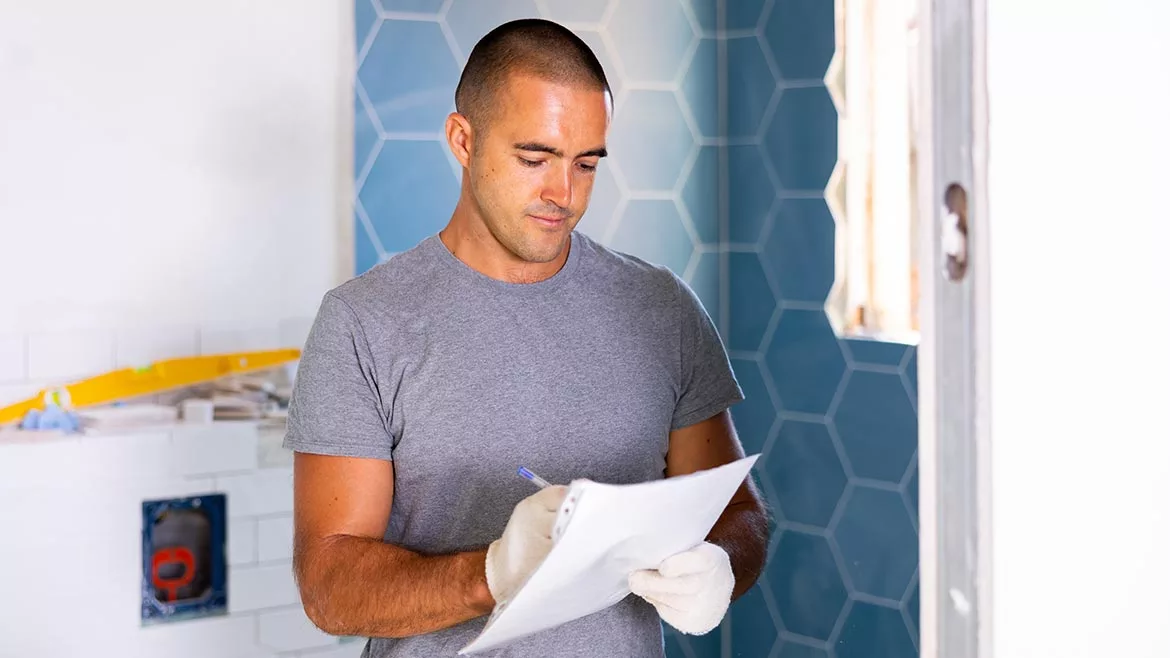
Whether you specialize in commercial, residential or multifamily you need to thoroughly evaluate the site to avoid costly failures. The evaluation process is similar for every segment of the industry but obviously the risks are higher for large or high-end projects. The evaluation process will differ for new construction and remodels.
New Construction
When you are evaluating a new construction site you need to know the right questions to ask, what information you require and what testing to perform. Not all of these will apply to every project. No matter what substrate you are installing over you need to have the HVAC operating with the space at service temperature for a successful installation. Monitor the progress of the project to avoid delays. Install a monitoring system like Floor Cloud (Climit) to confirm the HVAC system is maintaining the space at consistent temperature and humidity. Check for excess contamination from other trades such as paint, spray texture and oil which may require additional substrate preparation.
Concrete Substrates:
- Ask when the slab was poured.
- Check the surrounding area for proper grade to allow for drainage.
- Verify the slab has sufficient PSI for floor covering using a Mohs test.
- Find out if curing compounds, hardeners or other coatings were applied and verify their compatibility with adhesives.
- Request the mix design and pay close attention to admixtures and fly ash content.
- Verify that the slab has an under-slab vapor retarder per ASTM E1745 since it is not required in all areas.
- Perform proper moisture and pH tests.
- Recommend moisture mitigation if needed.
Wood Substrates:
- Find out the specific type of wood that was used as a subfloor and verify the suitability for a glue down installation or if an underlayment is required.
- Some projects may have different types of plywood or OSB such as fire retardant, waterproof, MGO, Homasote or pressure treated.
- Some of these subfloors are not suitable for glue down flooring installations.
- Use a pin meter to check the moisture content of the wood subfloor.
Gypcrete or Lightweight Concrete:
- Ask when the overlay was poured.
- Test the moisture content using the manufacturers recommended test method.
- If the moisture content exceeds the recommended maximum, allow the substrate to dry prior to covering it with impervious floor covering.
- Verify the substrate has sufficient PSI for floor covering using a Mohs test.
Existing Remodel
Find out the age of the building to know if you need to test for lead or asbestos. Ask about the history of the building and what previous floor coverings were installed. If you find out the substrate was chemically abated, you should consider avoiding the project.
Concrete Substrates:
- Perform proper moisture and pH tests.
- Look at the grade of the slab since on and below grade slabs are more likely to have moisture issues although I have seen high moisture in suspended slabs.
- Consider the age of the slab as part of the evaluation since high RH, MVER or pH readings in an older slab indicates moisture intrusion.
- Moisture intrusion indicates an external moisture source and that the required under-slab vapor retarder is missing or compromised.
- If the slab was poured prior to 1970 it is likely the slab never had an under-slab vapor retarder.
- Some areas still do not require an under-slab vapor retarder, or they allow for a granular layer on top of it which renders it ineffective.
Wood Substrates:
- Older buildings may have a variety of subfloor materials that may no longer code.
- Knowing what is under the current floor covering is a critical part of the site evaluation process.
- I have personally found as many as four layers of resilient flooring in an older remodel which greatly increased the demo time and added cost.
- There may also be multiple layers of adhesive built up from previous floor coverings.
- Wood destroying insects and wood rot may also be an issue that will need to be addressed.
Knowing all the additional labor and materials that will be needed for the project will enable you to provide your customer with a realistic cost and completion date. Obviously, there can also be unforeseen obstacles that will need to be corrected. A thorough site evaluation will enable you to provide your customer with the best possible results while protecting you from cost and time overruns.
Looking for a reprint of this article?
From high-res PDFs to custom plaques, order your copy today!


